Wiring Up Tense Cooling Fans
-Michael Warren Gamaliel Harding, June 2022
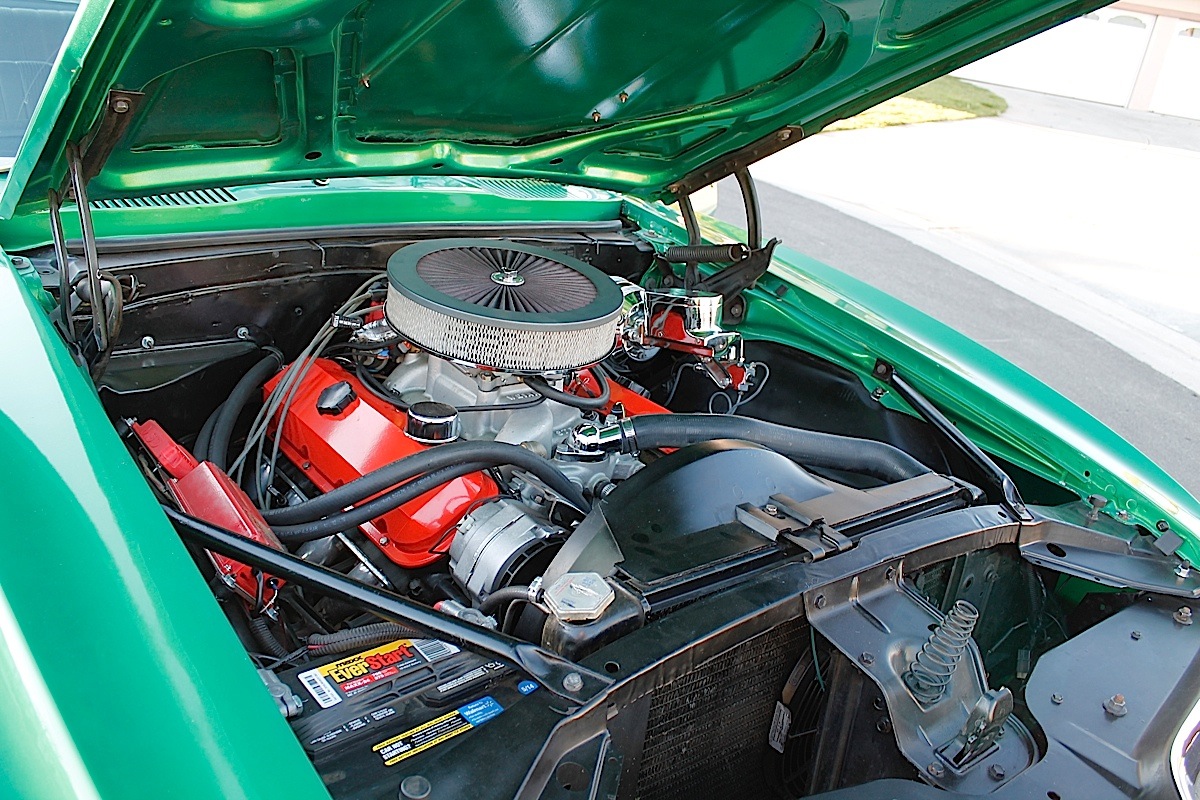 A couple of decades past, it was popular to simply add a switch under the dash to control an electric temperature reduction fan, often referred to as an auxiliary buff. This was a mediocre way of doing things, primarily because the current requisite to spin the fan was tired through the switch itself. In electrical footing, that's a zero-no; you should never depend on a switch on the dash to handle the kind of current required to power an accessory that is much 10-15 amps.
A number of things can (and sometimes testament) miscarry, even if you buy a switch that can handle 15 amps. The other drawback was that this method required your attention to make sure you flipped the flip - especially if you replaced your mechanical buff altogether.
Those mechanical fans were hunky-dory for stock vehicles coming off the showroom flooring in the 1960s and 1970s, merely in reply then many cars were sighted horsepower numbers far below 400. Today, IT's usual to see a 500+ horsepower car or motortruck secondhand As a regular - or even regular - number one wood.
Victimization a mechanical winnow for a high HP application tail end work fitting fine if a couple of things are considered. A larger radiator, a larger clutch-fan, and a winding-clothes would in all probability keep on your engine unqualified; mechanical fans can sometimes work better than electric fans.
For much, however, electric cooling system fans are not only keeping the engine cooler in dealings, but they keep the engine cool at stop lights, to a fault. Mechanical fans only cool as much as they can based connected the engine speed up, but electric fans delineate the maximal cfm at stagnate because they operate independently of engine revolutions per minute.
The one drawback to adding more electrical components to your vehicle is that often times the original alternator was not designed to handgrip current draws ended 45-60 amps, soh as you tally a single or dual electric chilling sports fan, consideration should be made to increase the output of your charging system with a beefier alternator.
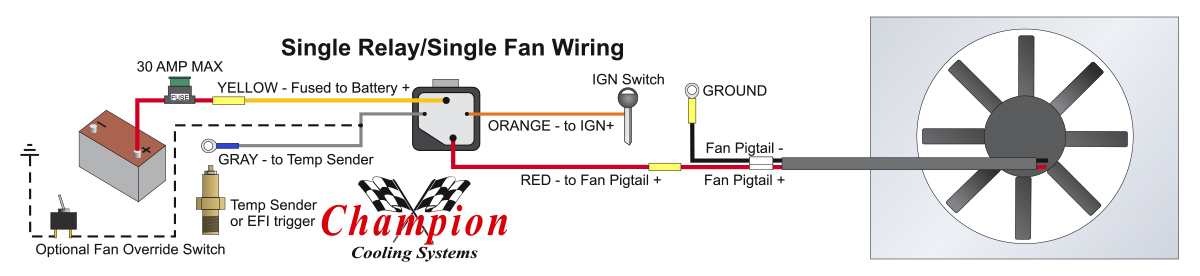
Wiring A Single Cooling Fan
Connecting a single cooling fan is a rather straight system, it relies along a single out temperature sender to switch the fan on, or you can utilize the cooling fan output if you've installed an aftermarket EFI conversion. A relay kit, our part number CCFKRL, will include everything you need to the right way wire up your electric cooling system fans, with the exception of additional wiring needed to complete whol of the circuits.
The foremost part of the installation is to install the blower to your radiator, and remove the mechanical fan. It's unlikely you would receive elbow room for both, but you should never run a windup sports fan with an electrical fan connected the synoptical side of the radiator. If your physical science lover had a lover spacer, it can be remote with the fan. Next, find a eligible location for the electrical relay that is away from excessive heat, and somewhere where information technology's non exposed to the elements, such as water splashing up from the road.
The temperature sender, if used, is studied to provide a ground signal at about 185 degrees, and will shut backward off when the temperature drops below 165 degrees. This wire (gray in our kit) supplies the establish signal to trigger the relay. The orange telegraph on the relay should go through a 12 volt signal when the firing replacement is turned on. The new two wires on the relay are the meat and potatoes of the system, with the xanthous electrify copulative to the battery along with the supplied combine mounted within 12 inches of the battery. For a remote battery, it can be connected to a power port wine in the engine compartment, simply it should be consolidated.
The red wire from our relay connects directly to the cooling lover, and the melanize wire from the cooling buff connects to ground, both wires will utilize our supplied fan harness. If you purchase our relay kit up, altogether compulsory connectors are included to splice wires together. We highly urge using a victorian crimp connector, and following the directions in our instructions for a trouble free induction. Our video recording, below, will too help guide you through the installation.
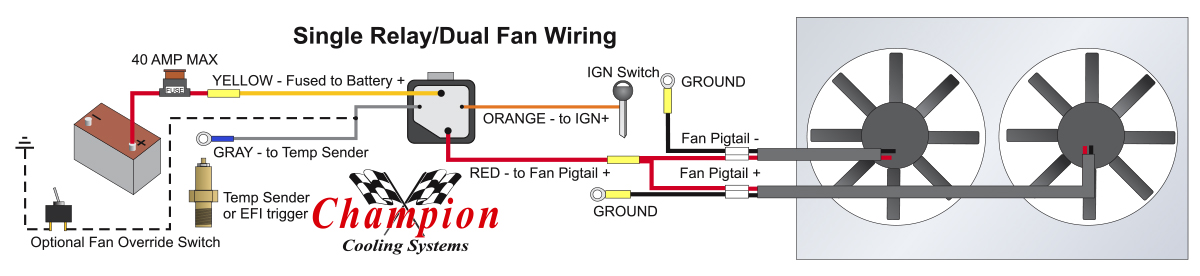
Wiring Dual Cooling Fans
With dual cooling fans, there are two methods for wiring sprouted the relay kit. This is supported on the draw from the fans, if the fans are larger and draw more than 15 amps each, IT's recommended to install a second electrical relay kit as shown to a lower place. For smaller fans, some fans seat be connected to a single relay Eastern Samoa shown above, and the proper fuse should be installed to protect the circuit while at the comparable time providing enough underway to run over without exceeding the meld rating. If the fuse does blow, and so it's a sure reading that you have too much imbibe on the system and a indorse relay should be added.
For a second electrical relay, both gray wires can be connected to the temperature sender, and both orange wires can be connected to your 12 V firing source. Each relay will control a single fan, and a 30 amp fuse is recommended for each relay connection to the battery. As you can see from the diagrams above and below, it's really a simple circuit that not only provides the proper connections to control the temperature reduction fans, but different the switch-subordinate-the-dash method acting - you won't ever have to worry about forgetting to go the fans on.
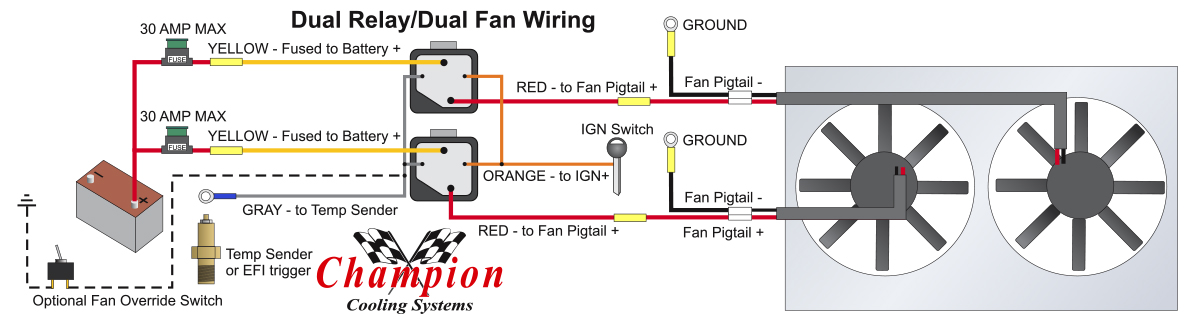
Wiring/Electric/Fans
How to Wire Up and Radiator Fan With Switch and Relay
Source: https://shop.championcooling.com/articles/Relay-Wiring